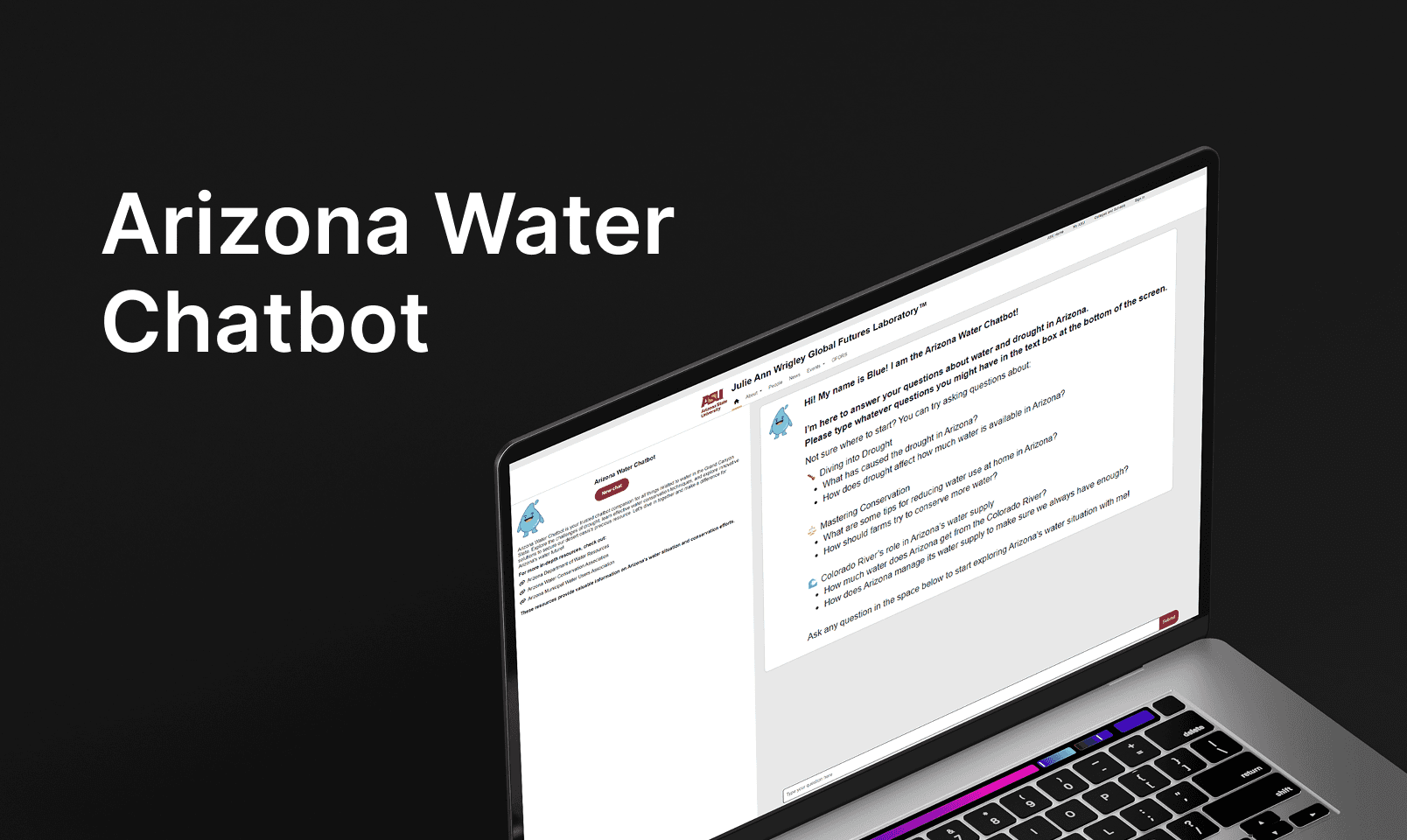
Arizona Water Chatbot
Conversational AI
UX Research
Usability Testing


The Solution
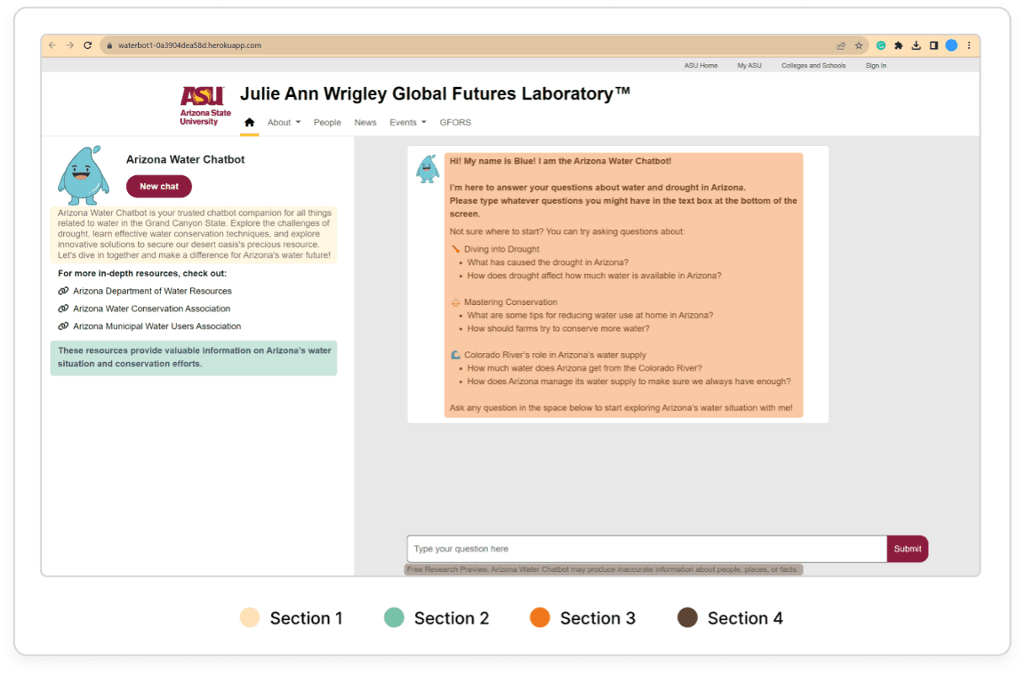
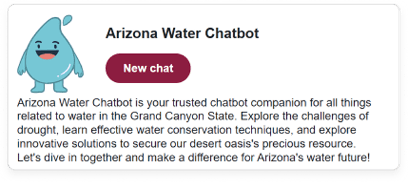
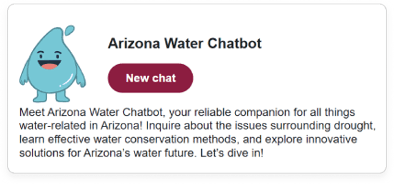
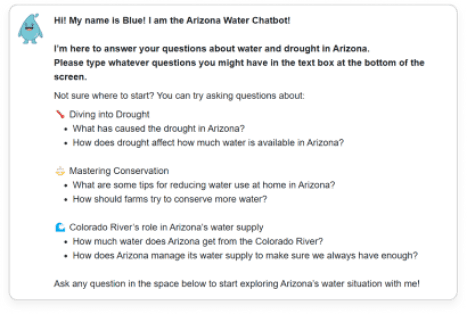
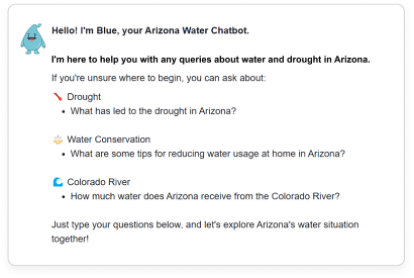
I designed a more welcoming, user-friendly chatbot experience, starting with a revised splash page. The final chatbot provides a single point of contact for users to get answers on key topics, validated through a full UX process.
Key Features:
Provides real-time information on water quality and safety.
Answers common billing and account inquiries.
Offers troubleshooting for common residential water issues.
Presents information in a simple, conversational interface.
Before Text

After Text

My design process was guided by an iterative cycle of user feedback and continuous refinement. Here’s how I approached the challenge.
Talking to the Community: User Interviews & Persona Development
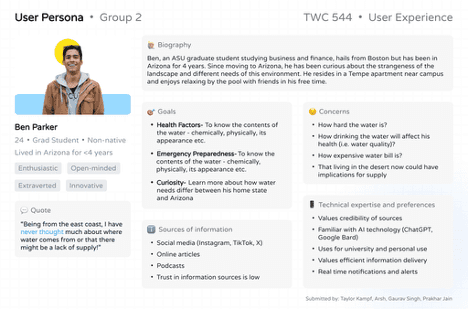
To ground the project in real-world needs, I conducted user interviews with Arizona residents... I used this data to develop a detailed user persona that served as a constant reference, ensuring user needs remained the focal point of every design decision.
Finding the Patterns: Collaborative Survey Analysis
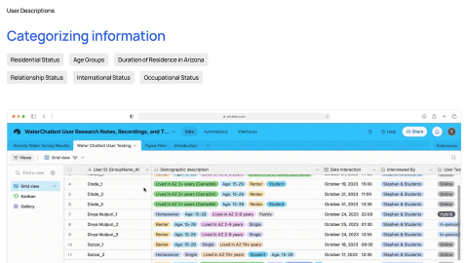
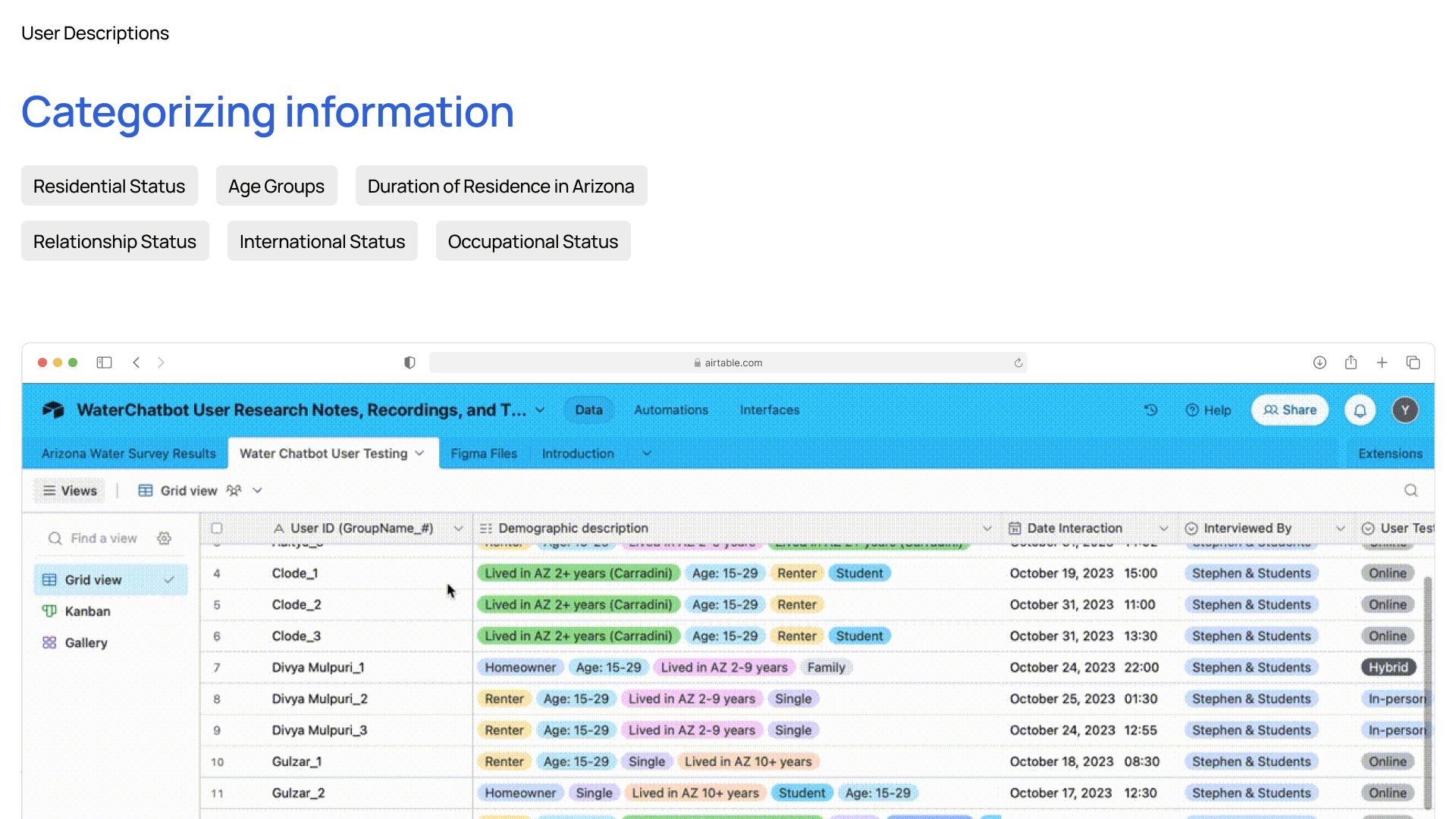
I collaborated with a team of six to conduct a qualitative data analysis workshop on survey results... Our data organization procedure involved using tools like Google Docs and Airtable to manage the information, which was vital for revealing patterns and informing our final recommendations.
Learning from the Experts: Heuristic Evaluation
I performed a heuristic evaluation by benchmarking the chatbot against conversational AI models like ChatGPT and Bard... This analysis uncovered key usability issues, including the chatbot’s inability to provide clear and concise responses in certain scenarios.
Observing Real Behavior: Usability Testing
Observing their interactions using the "think aloud" method offered immediate, unfiltered feedback... This testing was crucial, as it highlighted that the chatbot often gave irrelevant responses, especially about indigenous populations—an important finding that might have been overlooked in traditional surveys.
The Final Design and Deliverables
Section 1
Before text
After text
Section 2
Before Text

After Text

OR

Section 3
Before Text
After Text
Section 4
Before Text

After Text

Empathy & Discovery: We utilized a "Think Aloud" method during usability testing to observe real-time reactions.
Data-Driven Insights: Using Airtable, we identified that 66.7% of testers were residents and 100% were in the 18-24 age bracket.
Critical Finding: We discovered that indigenous information felt "copy-pasted," leading to a redesign of how resource links were presented.
To effectively communicate the project’s progress and outcomes, I compiled all findings into a detailed slide deck. This presentation highlighted the entire research process, identified the challenges we faced, and showcased the final chatbot design and revised splash page, creating a clear narrative of the chatbot's iterative evolution.
This project was a significant accomplishment because it exemplified the application of human-centered design principles to solve real-world problems. It broadened my understanding of conversational UI design and the complexities of developing AI-powered solutions.
The insights gained from direct user feedback were pivotal in making iterative design improvements, enhancing my problem-solving skills and reinforcing the importance of user advocacy in product development. It was a rewarding opportunity to learn and grow, and I look forward to applying these insights in future projects.
My Process: From Insights to Impact
My design process was guided by an iterative cycle of user feedback and continuous refinement. Here’s how I approached the challenge.
Talking to the Community: User Interviews & Persona Development
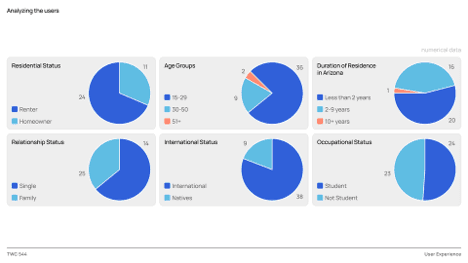
I conducted interviews with 47 Arizona residents, including 38 students and 24 renters, to ground the persona in real-world data that served as a constant reference, ensuring user needs remained the focal point of every design decision.

Finding the Patterns: Collaborative Survey Analysis
I collaborated with a team of six to conduct a qualitative data analysis workshop on survey results. I categorised data into six specific themes (e.g., Residential Status, Duration of Residence) using Airtable to reveal behavioral patterns. which was vital for revealing patterns and informing our final recommendations.
Learning from the Experts: Heuristic Evaluation
I performed a heuristic evaluation by benchmarking the chatbot against conversational AI models like ChatGPT and Bard. Identified specific technical failures: slow response times, distracting text density, and inaccurate information regarding local tribes.
Observing Real Behavior: Usability Testing
Observing their interactions using the "think aloud" method offered immediate, unfiltered feedback. Testing revealed that users felt indigenous responses were 'copy-pasted'; I documented 35+ hours of research to solve these pain points.

Quantitative Research Metrics
To validate the persona development, I analysed data from 47 total participants to identify statistically significant trends. This diverse pool included 38 students and 9 non-students, ensuring the chatbot's utility for both academic and general residential use. Furthermore, the research balanced the perspectives of 11 homeowners and 24 renters, alongside a mix of long-term residents (20 participants with 10+ years in AZ) and newcomers (16 participants with less than 2 years in AZ), providing a comprehensive view of Arizona’s water information needs.

The Final Design

Section 1
Before Text
After Text
Section 2
Before Text

After Text

Or

Section 3
Before Text

After Text

Section 4
Before Text

After Text

Technical Benchmarking & Functional Gaps
Through heuristic evaluation, I identified critical functional gaps by benchmarking the chatbot against industry leaders like ChatGPT and Bard . Users expressed a strong desire for "standard" AI features that were currently missing, such as the ability to save responses, regenerate answers, and provide feedback via like/dislike buttons . These findings moved the project beyond simple text edits and toward a requirement for more robust interactive architecture.

Strategic Recommendations & Future Roadmap
The project concluded with a strategic roadmap for the next development phase, focusing on three key areas:
Machine Learning Refinement: Training the bot to avoid "copy-pasted" responses and provide more accurate, concise information regarding indigenous populations.
Interaction Affordance: Adding visual cues to suggested questions to make them appear clickable and intuitive for first-time users.
Navigation Best Practices: Ensuring all external resource links open in a new tab to maintain the user’s active chat session.

Reflections & Lessons Learned
Human-Centered Problem Solving
This project served as a powerful reminder that UX design is not just about aesthetics, but about applying human-centered principles to solve real-world problems. By addressing the scattered and inaccessible nature of Arizona’s water data, I learned how to transform complex, multi-source information into a single, user-friendly platform that meets a critical community need.
Mastering Conversational AI Complexity
Developing the Arizona Water Chatbot significantly broadened my understanding of conversational UI design and the unique challenges of AI-powered solutions. Navigating the balance between technical constraints—such as slow response times and inconsistent accuracy—and user needs for concise, trustworthy information was a pivotal learning experience in managing product trade-offs.
The Power of Iterative Feedback
The insights gained from direct user feedback were the most critical drivers of improvement. Observing real-world interactions using the "think aloud" method highlighted issues, such as irrelevant responses regarding indigenous populations, that quantitative data alone could not reveal . This reinforced my role as a user advocate, ensuring that the final deliverable was not just a design concept, but a validated tool for the community.
