Eudemonia
Conversational AI
UX Research
Usability Testing

Lead UX Designer, UX Researcher, and Prototyper.
Role
Tech Stack
Spring 2024
Year
The Problem
The Eatery’s fragmented interface makes finding menus and completing orders difficult, leading to user frustration and high cart abandonment rates.
My initial research confirmed that remote employees face significant mental health challenges due to technological dependency and lack of face-to-face interaction. Surveys revealed that 65% of participants reported increased stress levels and 50% struggled to disconnect from their digital work environments.
Some Features:
Newsletter Subscription
Offers & Discounts
Chef Details
Food Ordering
Menu Available
Table Reservation
Sign Up / Login
The Solution
Take frequent user feedback after each iteration or when adding/updating features. (Google form link: https://forms.gle/kcCU8xnb3fkfrQZB9 )
Add an option to update previously reserved bookings in the restaurant.
Improve user flow of the website by providing straightforward navigation to various components.
Improve small talk in the chatbot and give a clear call to action in chatbot functionality.
Improve the UI & UX of the reservations page.
I designed a seamless digital environment that fosters emotional connection and mental well-being
Key Features:
Mood Tracking: Interactive "Log Mood" tools to visualise emotional progress.
Guided Meditations: A curated library of resources to mitigate digital fatigue.
Virtual Social Spaces: Peer support features and virtual coworking to reduce isolation.
Progress Tracking: Data-driven tools to help users manage work-life balance.
My Process: From Insights to Impact
My design process was guided by an iterative cycle of user feedback and continuous refinement. Here’s how I approached the challenge.
Talking to the Community: User Interviews & Persona Development
I conducted interviews with 47 Arizona residents, including 38 students and 24 renters, to ground the persona in real-world data that served as a constant reference, ensuring user needs remained the focal point of every design decision.

Finding the Patterns: Collaborative Survey Analysis
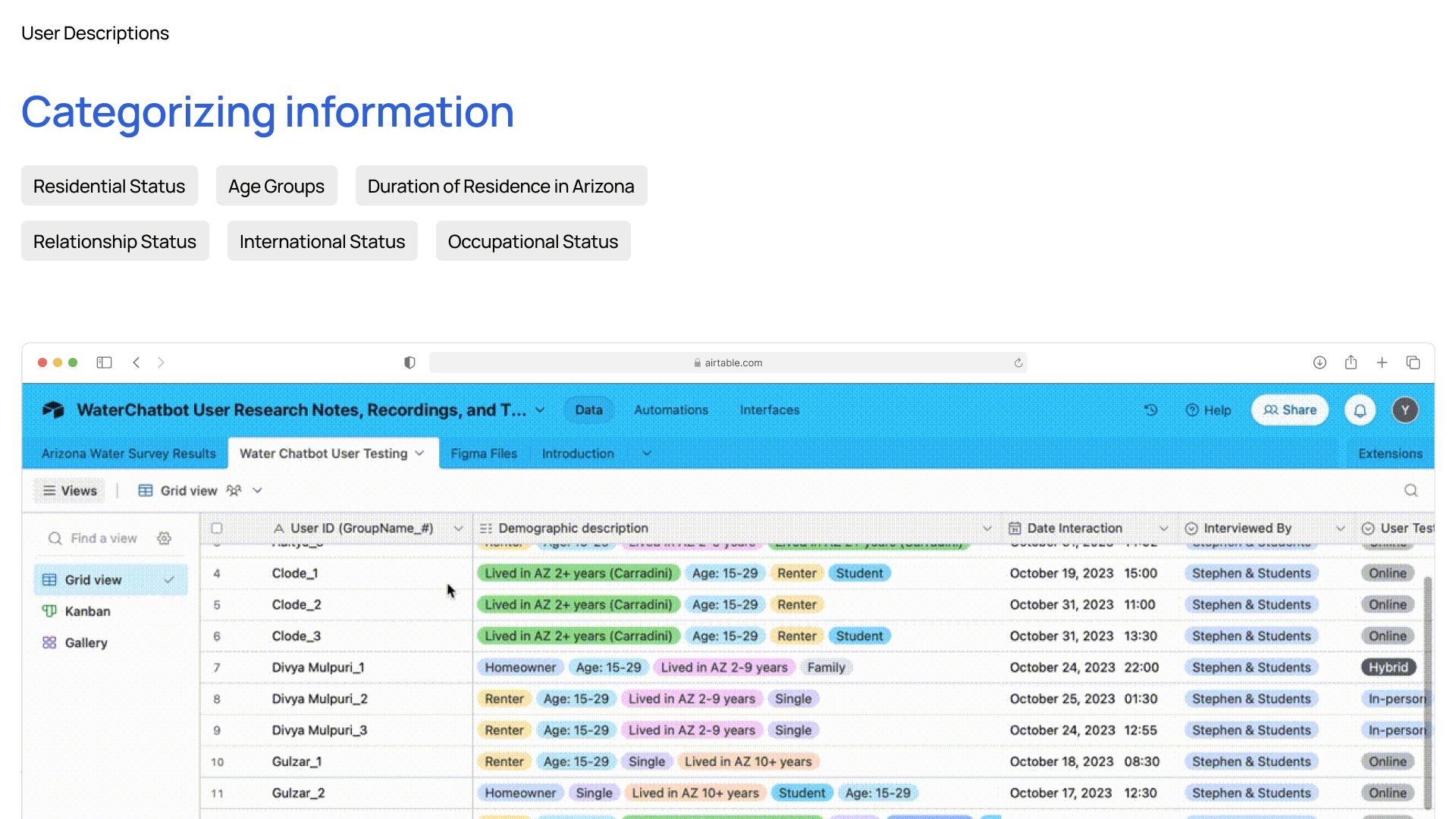
I collaborated with a team of six to conduct a qualitative data analysis workshop on survey results. I categorised data into six specific themes (e.g., Residential Status, Duration of Residence) using Airtable to reveal behavioral patterns. which was vital for revealing patterns and informing our final recommendations.
Learning from the Experts: Heuristic Evaluation
I performed a heuristic evaluation by benchmarking the chatbot against conversational AI models like ChatGPT and Bard. Identified specific technical failures: slow response times, distracting text density, and inaccurate information regarding local tribes.
Observing Real Behavior: Usability Testing
Observing their interactions using the "think aloud" method offered immediate, unfiltered feedback. Testing revealed that users felt indigenous responses were 'copy-pasted'; I documented 35+ hours of research to solve these pain points.

Quantitative Research Metrics
To validate the persona development, I analysed data from 47 total participants to identify statistically significant trends. This diverse pool included 38 students and 9 non-students, ensuring the chatbot's utility for both academic and general residential use. Furthermore, the research balanced the perspectives of 11 homeowners and 24 renters, alongside a mix of long-term residents (20 participants with 10+ years in AZ) and newcomers (16 participants with less than 2 years in AZ), providing a comprehensive view of Arizona’s water information needs.

The Final Design

Section 1
Before Text
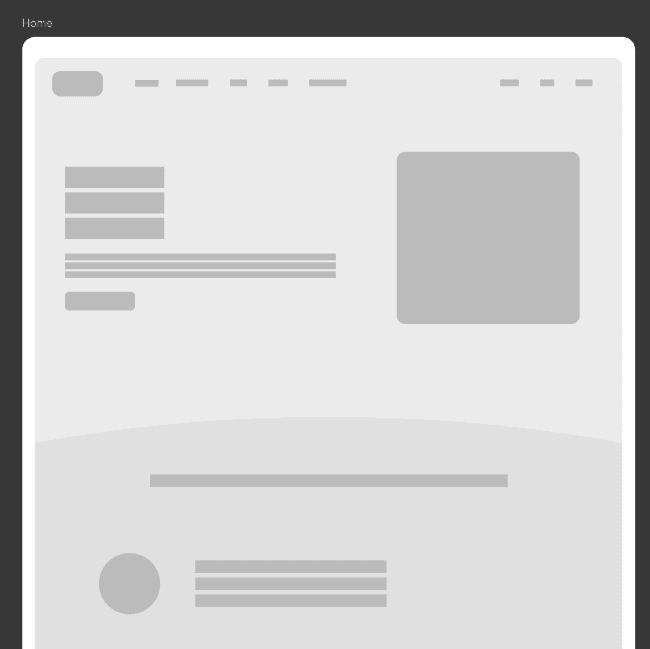
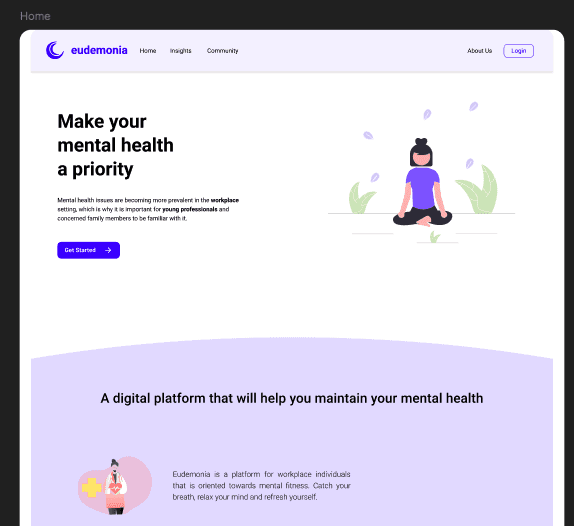
After Text
Section 2
Before Text

After Text

Or

Section 3
Before Text

After Text

Section 4
Before Text

After Text

Technical Benchmarking & Functional Gaps
Through heuristic evaluation, I identified critical functional gaps by benchmarking the chatbot against industry leaders like ChatGPT and Bard . Users expressed a strong desire for "standard" AI features that were currently missing, such as the ability to save responses, regenerate answers, and provide feedback via like/dislike buttons . These findings moved the project beyond simple text edits and toward a requirement for more robust interactive architecture.

Strategic Recommendations & Future Roadmap
The project concluded with a strategic roadmap for the next development phase, focusing on three key areas:
Machine Learning Refinement: Training the bot to avoid "copy-pasted" responses and provide more accurate, concise information regarding indigenous populations.
Interaction Affordance: Adding visual cues to suggested questions to make them appear clickable and intuitive for first-time users.
Navigation Best Practices: Ensuring all external resource links open in a new tab to maintain the user’s active chat session.

Reflections & Lessons Learned
Human-Centered Problem Solving
This project served as a powerful reminder that UX design is not just about aesthetics, but about applying human-centered principles to solve real-world problems. By addressing the scattered and inaccessible nature of Arizona’s water data, I learned how to transform complex, multi-source information into a single, user-friendly platform that meets a critical community need.
Mastering Conversational AI Complexity
Developing the Arizona Water Chatbot significantly broadened my understanding of conversational UI design and the unique challenges of AI-powered solutions. Navigating the balance between technical constraints—such as slow response times and inconsistent accuracy—and user needs for concise, trustworthy information was a pivotal learning experience in managing product trade-offs.
The Power of Iterative Feedback
The insights gained from direct user feedback were the most critical drivers of improvement. Observing real-world interactions using the "think aloud" method highlighted issues, such as irrelevant responses regarding indigenous populations, that quantitative data alone could not reveal . This reinforced my role as a user advocate, ensuring that the final deliverable was not just a design concept, but a validated tool for the community.
